

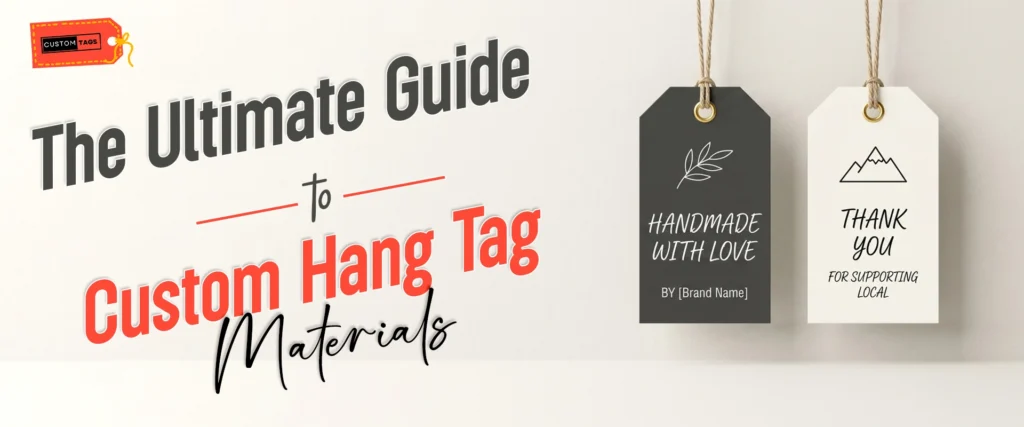
Nowadays, packaging is very important, and product hang tags are also part of that packaging. These tags are the first thing that the customers touch. This can make or break your brand’s impression. This is more than just a piece of paper that gives information about the products, such as prices or the ingredients. Here in this blog, you will learn about the materials that are use to make these tags. This will help you choose the right material according to your products and make the best tags.
What are custom hang tags?
Custom hang tags are labels that are custom-made according to the theme of the brands and are attach to the outside of the product. These tags have information related to the products. Many companies use them to display the sizes, prices, and barcodes of the products. These tags were not given so much importance in the past, but now they leave a lasting impression, especially different-shaped hang tags such as custom circle tags and others. These tags help brands gain more customers as many people post these uniquely shaped tags on social media platforms.
What materials are use to make these tags?
The material is the base of the label. The material use to make tags determines the thickness, texture, weight, and printing capacity of the tags. Here is the comprehensive guide on different materials use to make these tags along with their uses and applications:
| Material type | Feature | Intended application |
| SBS C1S | Coated front | Retail apparel with barcodes |
| SBS C2S | Clay coating on both sides | Premium electronics and cosmetics |
| Woodfree paper | Porous, matte texture | Minimal fashion and boutique goods |
| Kraft paper | Brown and organic texture | Outdoor gear and artisanal crafts |
| Coloured paper | Full solid color | High-contrast designs and logos |
| CCNB | White printing top and grey backing | High-volume retail |
| Metallic paper | Reflective paper | Luxury jewels and holiday gifts |
| Textured paper | Three-dimensional patterns | Bridal wear and organic skincare |
| White kraft paper | Bleached natural fiber | Sustainable brands |
| Holographic paper | Light refracting, shifting rainbow gradients | Streetwear and youth-focused media |
| Black cardboard | Deep carbon pigment | Luxury products with gold foil stamping |
| Coated kraft | White front and unbleached black | Footwear and industrial tools |
Now let’s dig into the details of all of these materials one by one:
SBS C1S
Solid Bleached Sulfate (SBS) is high-density paperboard make from bleach virgin wood fibers. The C1S means “coat one side.” As this has only one side coat, the surface is smooth with a clay coating. The other side remains uncoat with a matte texture. These hang tags gives these tags a professional and clean look, which is best suited for retail businesses.
SBS C2S
This has a coating on both sides; that’s why it is “coat two sides.” It has an identical smooth clay coating on both the front and back sides. It is best for tags that want printing on both sides. Gloss UV and soft-touch lamination are suit for this.
Woodfree Paper (W/F)
This paper is also known as offset paper or fine paper. It is produce using chemical pulp. It has a porous and uncoated matte texture that absorbs ink quickly. This is best when you don’t want a glossy or plastic-like reflection.
Kraft Paper
This kraft paper tag is made using unbleached wood pulp. It has a rustic look and has good tear resistance. It is prefer for jeans, denims, and brands that want to use environmentally friendly materials.
Colored Paper
This paper is make in such a way that the color is mix directly into the liquid pulp rather than getting color print on the white paper. This means that when you cut the hole in the tag, the edges of the hole are also of the same color as the tag instead of white lines. High-end luxury brands use these because they don’t want to compromise on the visual appeal of their products.
CCNB
Clay-Coated News Back (CCNB) is the material that is made from old corrugate containers, recycle newspaper, and post-consumer waste fibers. These tags have a white top clay coating with a grey or brown back. It is a budget-friendly option.
Metallic Paper
This has regular cardboard attached with aluminum foil or a vacuum-metalized coating. Because of this, it has a very reflective surface. This helps to attract clients. It has different colors such as gold, silver, and bronze. It is use for limited-edition or holiday-base products and gives them a luxurious look.
Textured Paper
This paper does not use chemical manufacturing. It has three-dimensional surface patterns pressed directly on the paper. It has different textures such as
- Linen
- Felt
- Laid lines
- Hammered texture
Luxury hang tags are usually used for extra luxury products such as bridal wear,organic skincare, and high-end stationery.
White Kraft Paper
This is make by bleaching the original kraft paper that has a brown color. It just remove some color and gives the paper a white look so that printing can be done on it easily. The properties of this paper are the same as those of kraft paper. It is often use by brands that want customize tags made with kraft material.
Holographic Paper
This paper holographic tags diffracts different colors and is made by laminating a plastic film into paperboard backing. It shows different colors when it is see from different angles and thus plays a role in catching the audience. It is use by youth-based merchandise and streetwear and gives an energetic look.
Black Cardboard
This is make using deep carbon pigments during the manufacturing process; this paper has a black color through the core and does not show white edges when holes are cut. It is best incorporate with metallic foil stamping, such as gold, silver, and bronze, and along with spot UV.
Coated Kraft (CCK)
This is industrial-level paper that has an unbleached kraft paper base with a smooth white clay coating. It has a smooth, printed white area on the front side and a brown back appearance of kraft paper. It is use for industrial tools, footwear boxes, and heavy outerwear.
Material choices
After going through the details of the materials, it is really important to check the types of strings available. These strings are as important for the packaging as the tag because they attach your tag to the product. It is really important to choose the right string for the right product hang tags. They influence how the tags will be place on the product and their movements. The following are the types of strings that you can choose from:
| String type | Composition | Best application |
| Bead Chain | Interlinked beads made of iron, brass, steel or aluminium | Designer wear, branded leather jackets, heavy-duty footwear |
| Cotton String | Natural cotton string spun and braided | Everyday casual wear items, children’s clothing |
| Hemp String | ade with hemp plant fibers twisted tightly | Organic skincare and soaps |
| Leather String | They give a luxury feel to the products and are available in genuine and faux leather | Winter coats, designer handbags, artisanal furniture |
| Metal String | Thin, flexible metallic wires | Jewelry, high-end watches |
| Paper String | Twisted and compressed kraft paper | For those brands that want zero plastic packaging, stationery bundles |
| Wax String | Polyester thread coated in beeswax or paraffin | Dress shirts, swimwear and luxury boutique clothing |
| Ribbon | Thin strips of velvet and organza | Bridal gowns, cosmetics, and luxury holiday gifts |
| String Tag | Pre-assembled tags with cotton or polyester loops | Retail shops, department stores |
| Elastic String | Stretchable rubber wrapped in polyester | Sportswear, footwear, activewear |
| Bullet String | Nylon or polyester cord | Luxury streetwear such as custom luxury tags |
| Tassels String | Silk, rayon or metallic threads in the form of decorative fringe | Lavish perfume bottles, limited edition books |
Uses of hang tags across different industries
These tags are use in a wide range of industries, where they serve different purposes. They are use for the following needs:
Price and sizing
These retail tags are used to list prices and sizes of the products. Many brands print their brand’s name and logo on the front side of the tags and mention barcodes along with sizes and prices on the back side.
Building authenticity
Many brands use special holographic tags to create a sense of originality and be authentic.
Connectivity
These QR code hang tags are use to present QR codes. These codes present the social media handles of the brands and help them to increase their reach.
Regulatory
These custom tags are also used to present regulatory warnings such as allergen warnings, product handling instructions, and other information.
Personalized messages
Some brands customize the tags and add personalized messages dedicated to their customers specifically.
Conclusion
These tags enhance the visual appeal of the products. These tags also deliver information regarding your product to the customers. Now, after going through this blog, you will be able to know which material to choose. Don’t order simple tags; go for custom rectangle tags and other customized tags. You can visit the website of The Custom Tags and explore different options.